Beijing Ancient Architecture Museum 北京古代建筑博物馆
A captivating set of exhibits explaining Beijing and China architecture on the grounds of Xiannongtan.
一系列引人入胜的展览,介绍北京及中国的建筑;展览就在先农坛内。
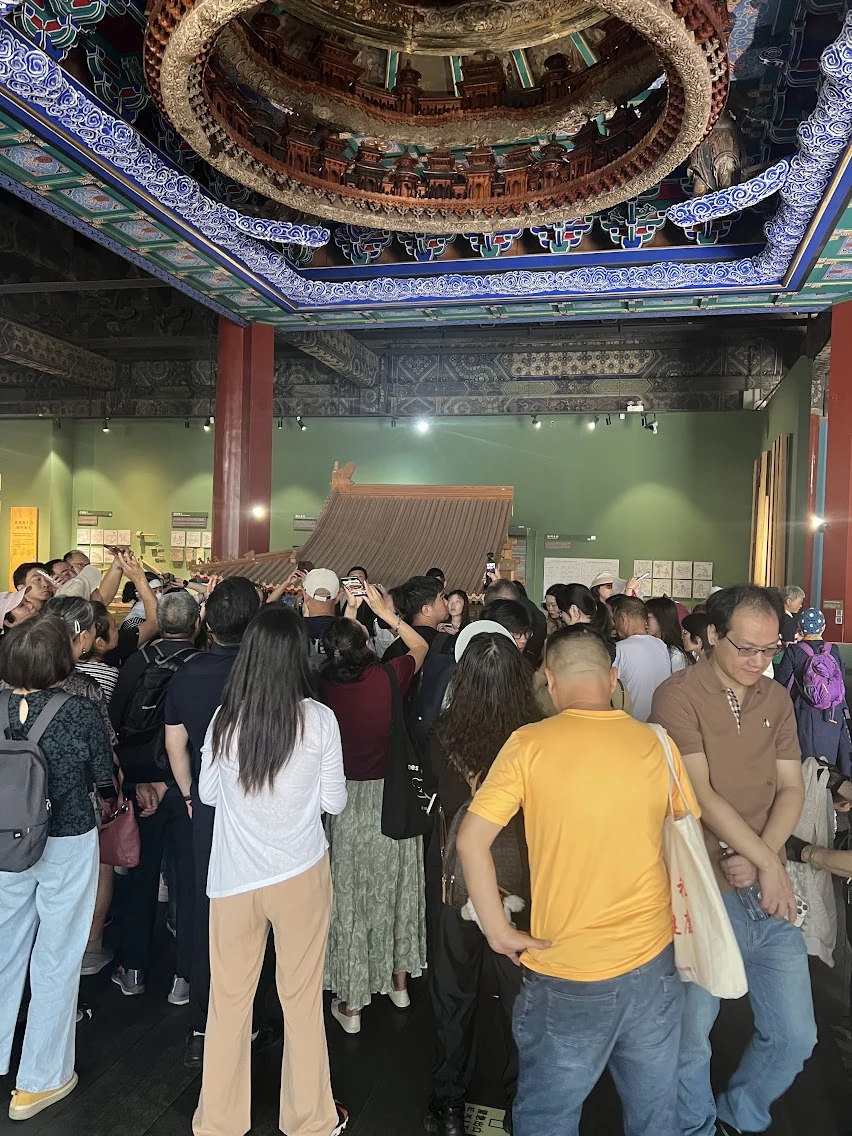 游客正在欣赏隆福寺万善正觉殿藻井。
More visit facts更多参观信息
- Opening hours · 开放时间
- Tuesday–Sunday, 9:00 a.m.–5:00 p.m.; last admission at 4:30 p.m.; Closed: Mondays. Holiday and special-event schedules may differ; check before visiting.
周二至周日,上午9:00至下午5:00;下午4:30停止入馆;周一闭馆。节假日及特殊活动期间的开放安排可能有所不同,出行前请确认。 - Visit length · 参观时长
- About 2 hours for the museum; allow extra time for the Temple of Agriculture grounds.
参观博物馆约需2小时;若还想游览先农坛园区,请预留更多时间。 - Admission · 门票
- Adults ¥15; students ¥8; minors and seniors free.
成人15元,学生8元;未成年人和老年人免费。 - Booking · 预约
- Purchase physical tickets at museum or virtual tickets via museum QR code.
可在馆内购买纸质门票,也可扫描馆方二维码购买电子票。 - English support · 英文支持
- Moderate. Free English audio-guide and English exhibit labels for major exhibits. Some smaller exhibits lack English.
中等。主要展览设有英文展签,并提供免费的英文语音导览;部分较小的展览没有英文内容。 - Published · 发布日期
- 3 Oct 2026 · 2026年10月3日
For our second museum visit we decided on the Beijing Ancient Architecture Museum located on the grounds of the historical Xiannongtan complex. It is also just west of the more famous Temple of Heaven making it a great 1-2 punch for those who have significant walking stamina. 1-2, 1-2. On our way to the museum, I was a little bit skeptical. How many archways, how many doors, and how many red a-frame buildings could we see? I imagined it like visiting a temple here - meaningful but bland. It was anything but.
这是我们的第二次博物馆之旅,我们选择了位于历史悠久的先农坛内的北京古代建筑博物馆。它也就在更有名的天坛以西;如果体力足够应付不少步行,很适合一趟连逛两个地方。一、二,一、二。出发去博物馆的路上,我还有点怀疑:拱门、门,还有红色的人字形屋顶建筑,到底还能看多少?我原以为它会像在这里参观一座寺庙——有意义,却有些平淡。结果完全不是那么回事。
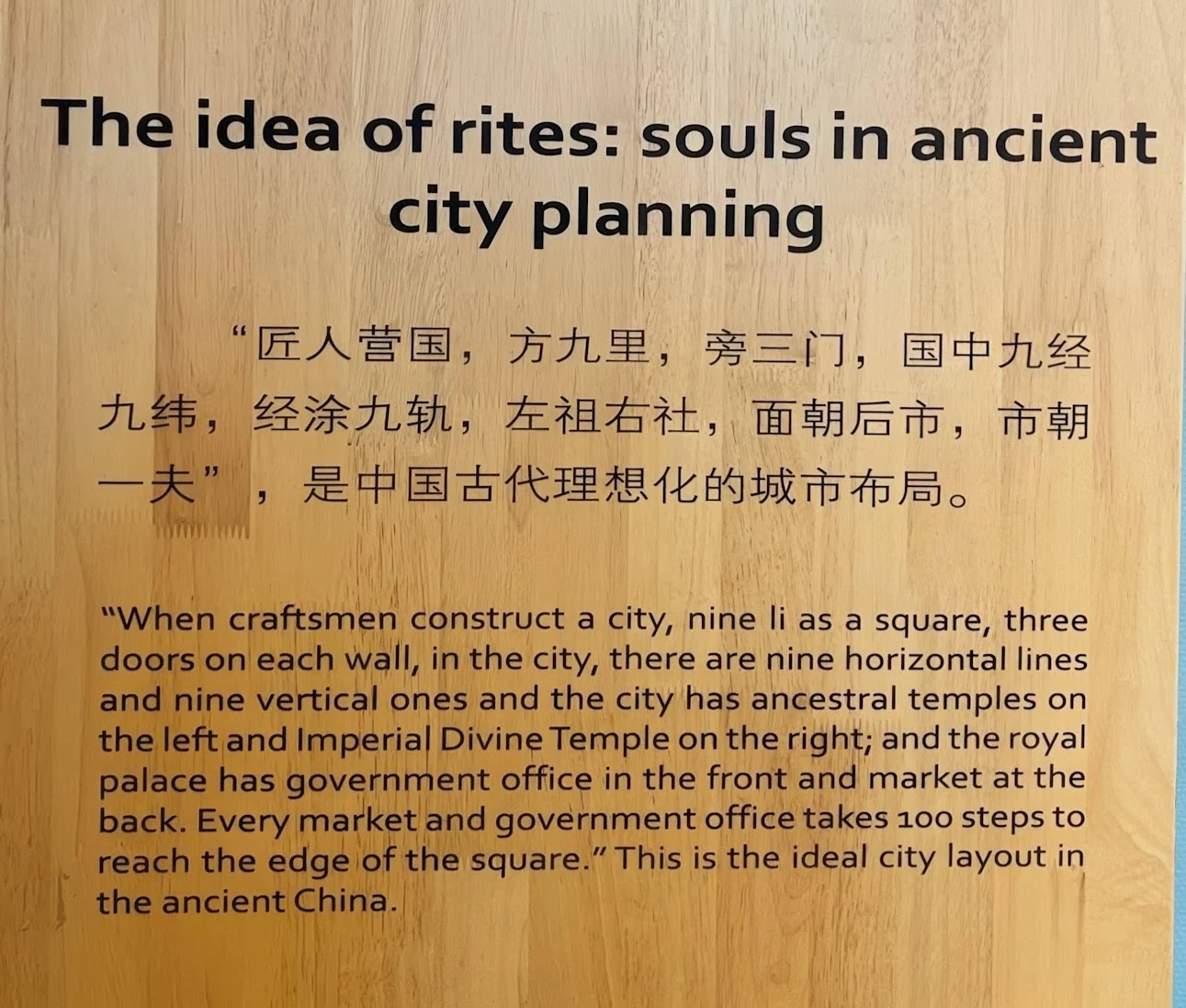
My first thought upon entering the grounds was it was large. We’d need a good two hours to get through the exhibits. Near the entryway was this sign which confused me on two fronts.
我走进园区时的第一个念头是:这里真大。看完这些展览,得花上两个小时。入口附近有一块牌子,让我有两点困惑。
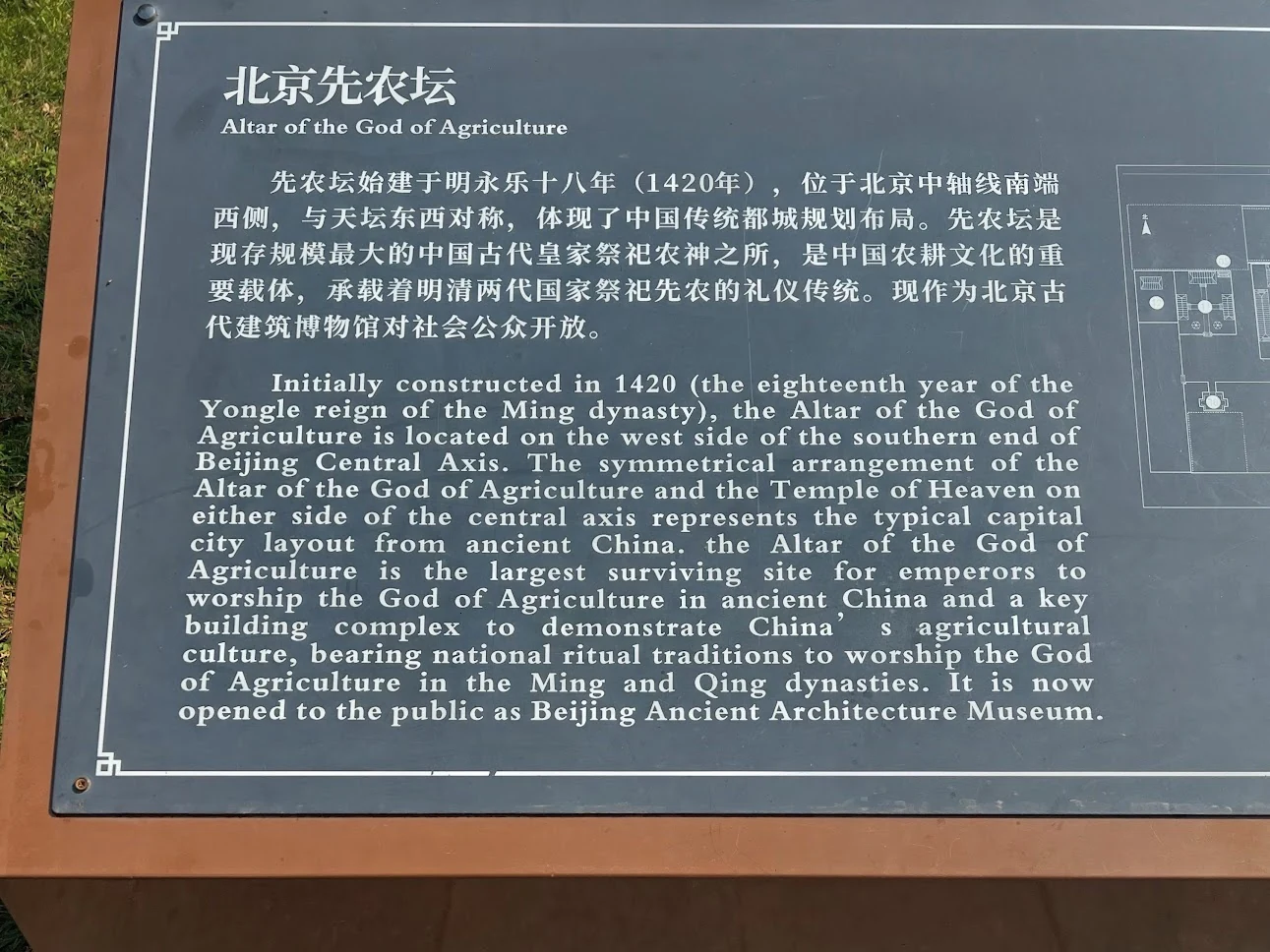
First, I thought we were at the Ancient Architecture Museum, not Agriculture. Second, 1420 must have been a busy year for seemingly most of historical Beijing were built or established then. Forbidden City - completed in 1420. Temple of Heaven - established in 1420. Xiannongtan - established 1420. It makes our current AI buildout seemingly modest by comparison.
首先,我以为我们来的是古代建筑博物馆,而不是农业博物馆。其次,1420年想必是个忙碌的年份,因为北京历史上似乎大部分建筑都是在那时建成或确立的。紫禁城——1420年建成。天坛——1420年设立。先农坛——1420年设立。和它相比,我们如今的人工智能建设热潮似乎都显得声势没那么浩大。
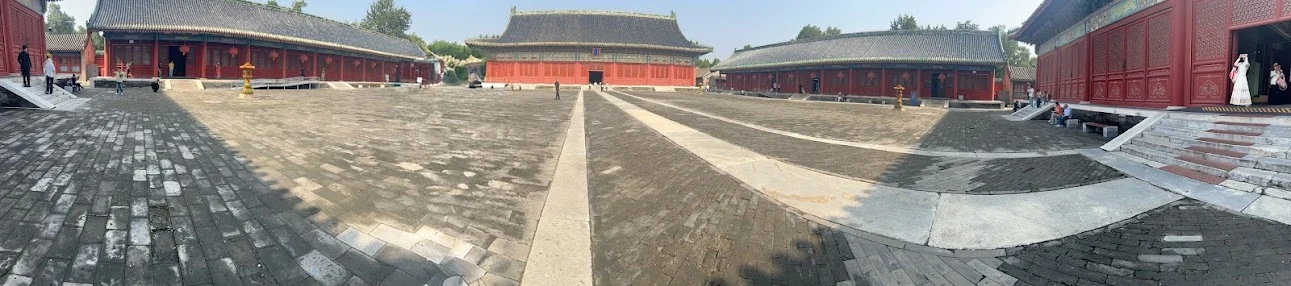
The main courtyard reminded me of a scaled down Forbidden City. It crossed my mind that the next time we have visitors, we can avoid the Forbidden City crowds and just take them to Xiannongtan and call it a day. The main courtyard had major halls along its north-south axis along with east and west flanking side halls. On this day we saw several couples and several singles taking photos including wedding photos; you can spot a couple in this photo of the main courtyard.
主院落让我想起一座缩小版的紫禁城。我当时想,下次有客人来,我们可以避开紫禁城的人潮,直接带他们来先农坛,一天的行程就算圆满了。主院落的主要殿堂沿南北中轴线排列,两侧则有东西配殿。这天,我们看到好几对情侣和一些独自前来的人在拍照,其中也有新人拍婚纱照;主院落这张照片里就能看到一对。
Most of the exhibits in the main courtyard had English signs which I very much need. There is also a free English audio guide accessible via a quick WeChat QR code scan. Exhibits are well organized and informative. There was one on the different gates (doors) you see in Beijing and China with replicas and explanations. The same for many architectural elements you see with photo examples from different provinces. Doors, roofs, archways, columns, city walls, foundations and so on. Much of it is accessible via text and photos. While we spent two hours at the museum and its grounds, we could have easily doubled that time.
主院落里的大多数展品都有英文说明,这对我来说很重要。现场还有免费的英文语音导览,扫一下微信二维码就能使用。展览安排得很有条理,内容也很丰富。有一部分介绍北京和中国各地不同的门,有实物复制品和相关说明;还有许多建筑构件的介绍,配有来自不同省份的照片。门、屋顶、拱门、柱子、城墙、地基等等。大部分内容都通过文字和图片呈现。我们在博物馆和园区里逛了两个小时,但再多待两个小时也完全可以。
A highlight of the main museum for me and it seems most visitors is this ceiling that originally came from Longfu Temple. When you point your cell phone camera at it, it seems to light up like magic.
对我来说,主展馆的一大亮点——似乎也是许多游客的心头好——是这座原本来自隆福寺的藻井。用手机摄像头对准它时,它仿佛会亮起来,像变魔术一样。
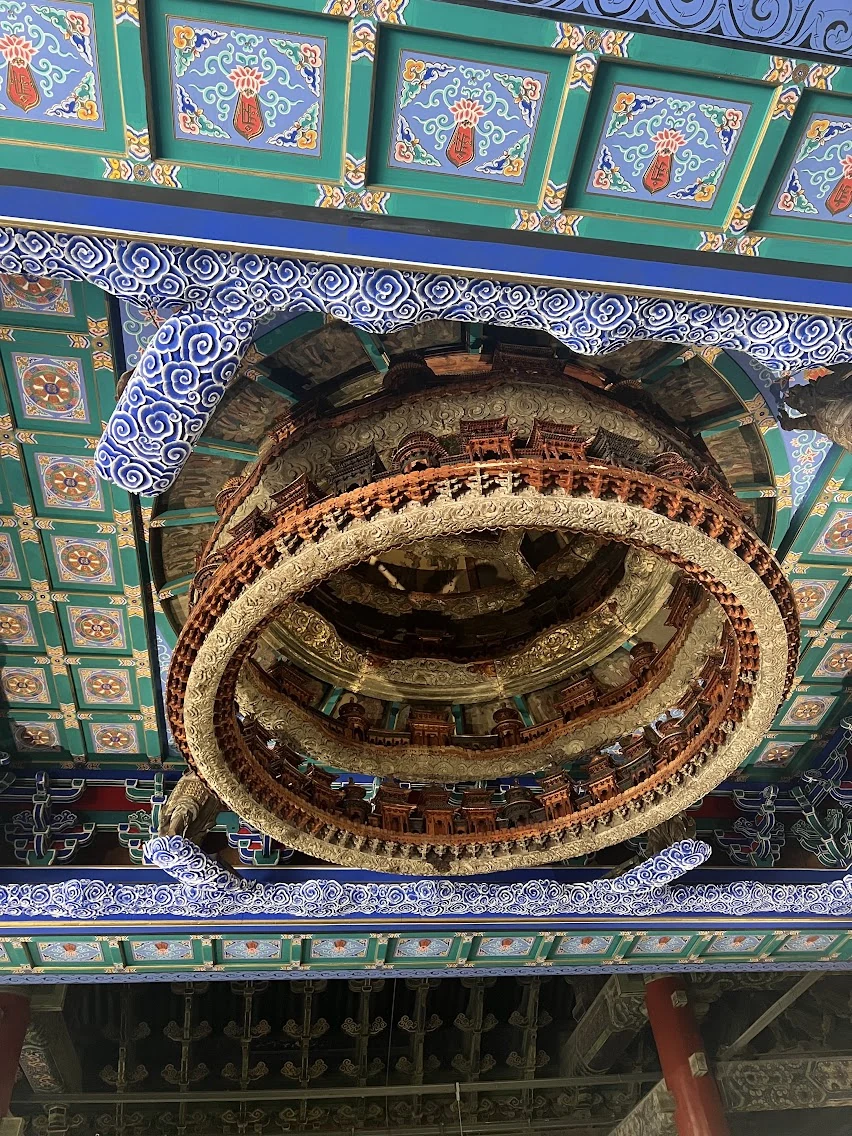 游客正在欣赏隆福寺万善正觉殿藻井。
The side halls of the courtyard were a bit hit and miss English signage wise. The ones with English were exhibitions that looked permanent while the ones without English appeared to be more recent or temporary exhibitions. I used image text translation a few times when the exhibit interested me (WeChat or Google Translate works well for this).
院落两侧的配殿在英文标识方面有好有坏。那些有英文标识的展览看起来像是常设展览;没有英文标识的则似乎更新一些,或者是临时展览。遇到感兴趣的展品时,我有几次用手机识图翻译(微信或 Google 翻译都挺好用)。
Walking the hutongs of Beijing it is easy to get lost in what feels like chaos even if you know the alleyways have existed for hundreds of years. This museum helps bring it all together with exhibits that explain the logic of the city layout.
在北京的胡同里走,很容易迷失在那种看似杂乱的感觉中,尽管你知道这些巷子已经存在了几百年。这座博物馆通过展览讲解城市布局的逻辑,帮我把这些线索串联了起来。
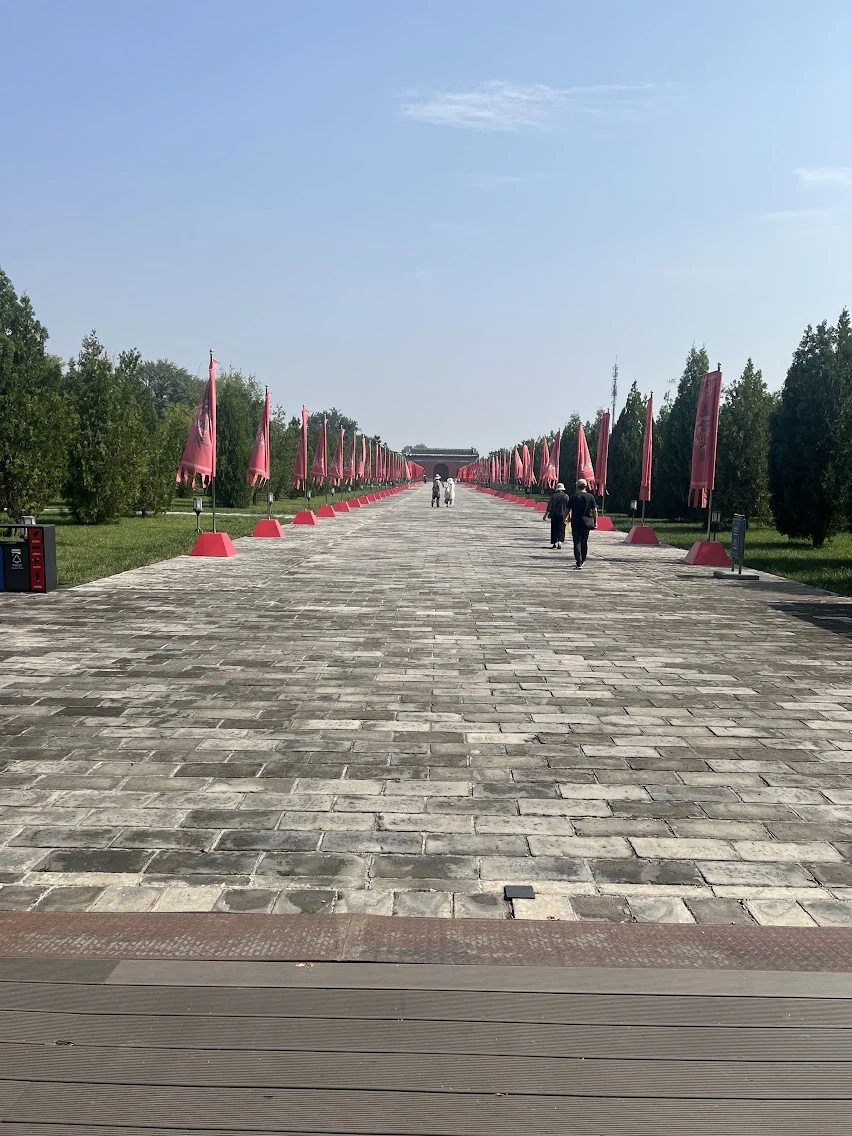
Once outside the main museums, the grounds make for a pleasant stroll. To the south, you hit the agriculture portion including the ceremony field the emperor would personally plough before observing from the viewing platform. To the east is a very dramatic looking walkway which we followed for a bit.
离开主要展馆后,园区很适合慢慢散步。往南走,就到了农事相关的区域,包括皇帝亲自耕作、之后再登上观耕台观看的仪式田。往东则有一条气势十足的步道,我们沿着它走了一小段。
Along the walkway, there is another palace, the Qingcheng Palace which I found the least interesting. Probably because my museum fatigue was setting in and it was also a bit commercial. We headed back and finished walking the grounds. The grounds themselves are pleasant. On this day there were classes of middle schoolers who had so much energy it made me wonder how they ever handle a sedentary classroom.
沿着步道走,还有一座宫殿——庆成宫。我觉得这里最没意思,可能是因为我的博物馆疲劳开始发作,也可能是它显得有点商业化。我们折返回去,继续逛完园区。园子本身很宜人。这天有几班中学生来参观,他们活力十足,让我忍不住想:在需要安静坐着的教室里,他们到底是怎么待住的?
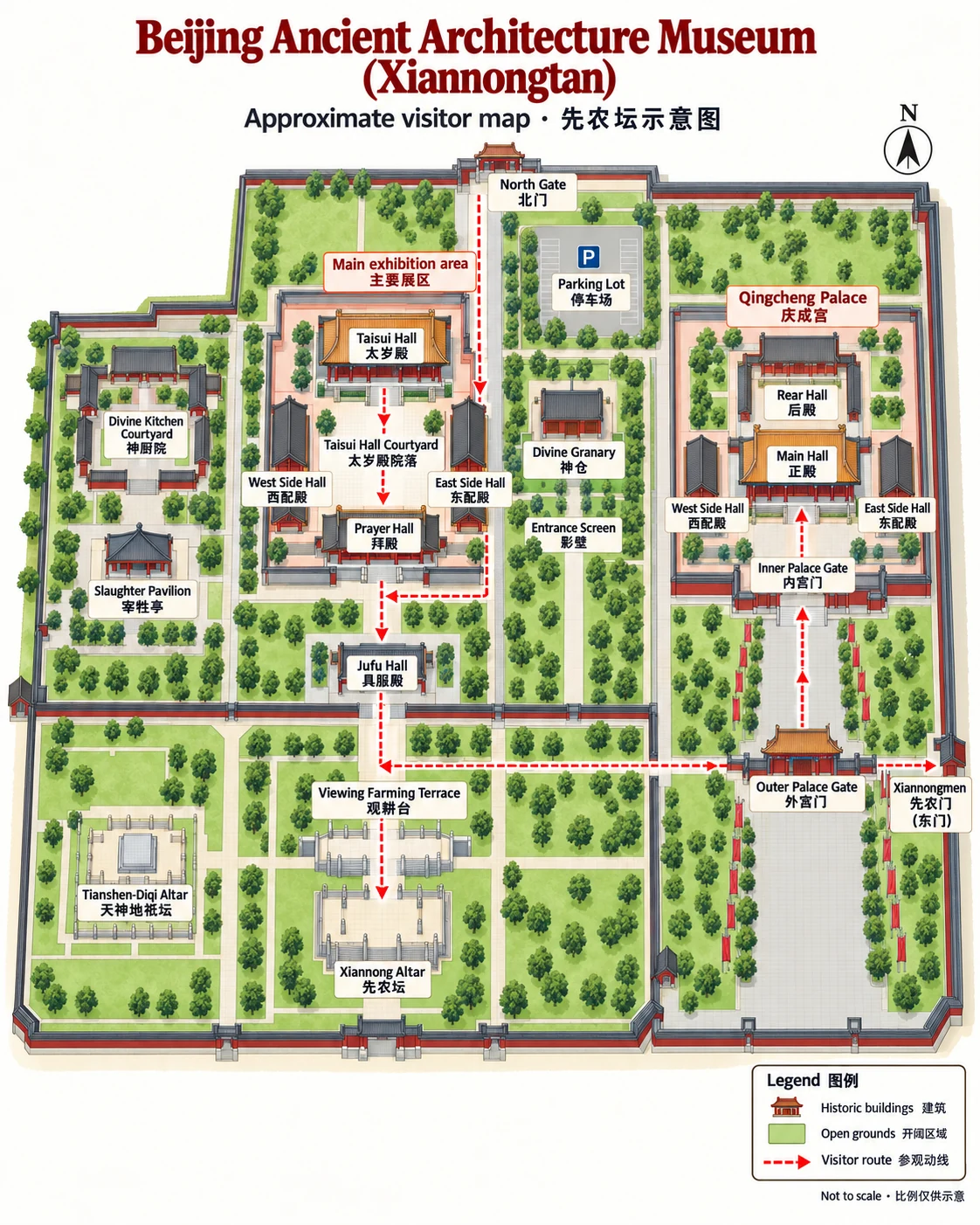
Our final stop was the Divine Kitchen Courtyard which was more interesting than Qingcheng Palace but not at the same level as the main exhibition area. This AI generated map gives a sense of the layout although you should refer to official maps including the one at the entrance of Xiannongtan.
最后一站是神厨院落。我觉得这里比庆成宫有意思,但还是不如主展区。这张 AI 生成的地图大致展示了园区布局,不过要找路,还是请参考官方地图,包括先农坛入口处的那张。
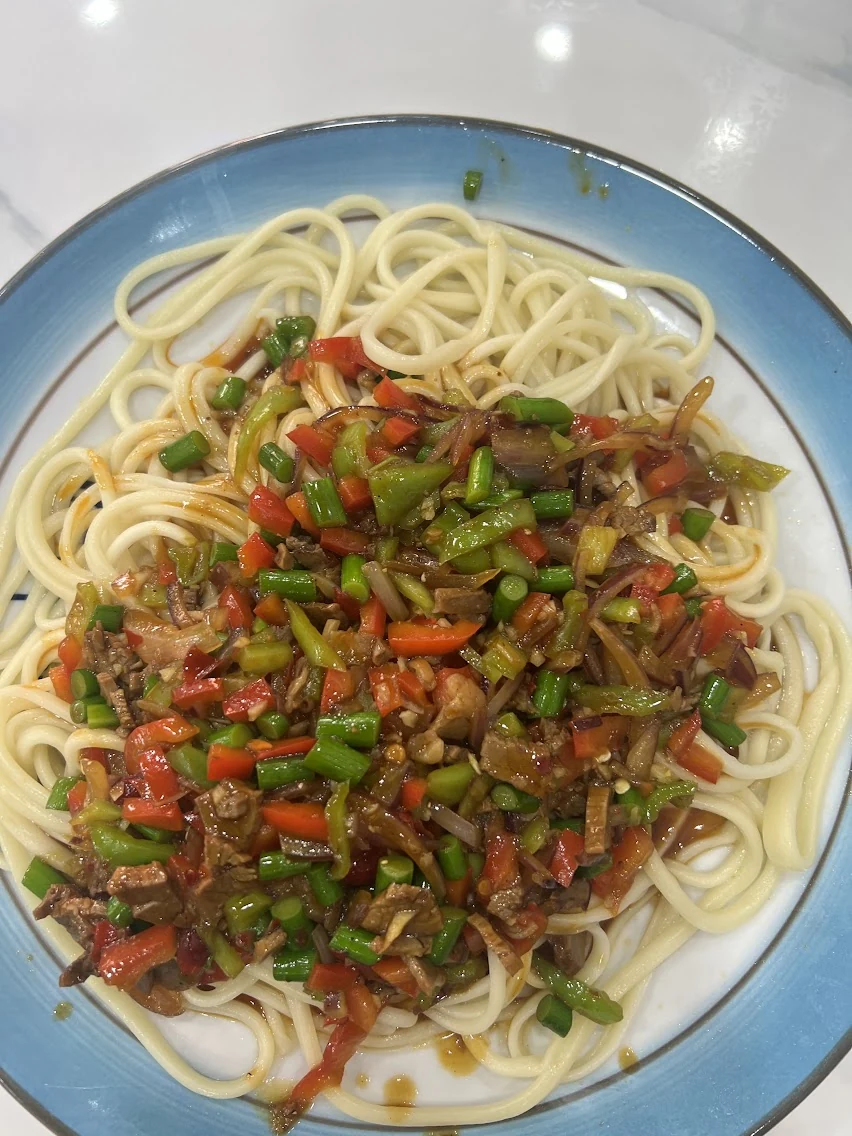
We drove to the museum on this day and found traffic and parking to be just fine. As fine as Beijing traffic can be with dodging the scooters. On our way back to our car we found several small restaurants. Did we want Beijing style snacks? Sichuan cuisine? Or Xinjiang dishes. Well, I couldn’t resist these Xinjiang noodles.
那天我们开车去博物馆,觉得路况和停车都还不错——当然,是以北京交通还要躲电动车的标准来说。回停车处的路上,我们发现了几家小餐馆。北京小吃?川菜?还是新疆菜?我实在没忍住,选了这碗新疆炒米粉。
As we drove home along the streets whose layout in places has not changed since 1420, I reflected on how great that age of development must have been. The sacrifices made. The enduring structures built. The legacies cemented. And I couldn’t help but wonder if we are entering an era like that again.
开车回家的路上,沿着一些街道的布局似乎自1420年以来就没有改变,我不禁想,那个建设的年代一定很了不起。付出的代价,留存至今的建筑,奠定下来的历史传承。我们是不是也正在进入一个类似的时代?
Additional Sources and Further Reading
- Beijing Ancient Architecture Museum / Xiannongtan — Official Museum Website (北京古代建筑博物馆 / 先农坛)
- Beijing Municipal Government — Beijing Ancient Architecture Museum (先农坛 / 北京古代建筑博物馆)
- Beijing Municipal Government — Xiannongtan / Beijing Ancient Architecture Museum
- Beijing Municipal Cultural Heritage Bureau — Xiannongtan Architectural Layout and Ritual Functions
- Visit Beijing — Beijing Ancient Architecture Museum
- Beijing Xicheng District Government — Beijing Ancient Architecture Museum Introduction
- Beijing Municipal Government — Reopening of Qingcheng Palace (庆成宫)
- Hainan Daily — “What Exactly Does Xiannongtan Look Like?” (先农坛究竟长什么样?)
- Beijing Municipal Cultural Heritage Bureau — Divine Granary / Shencang (神仓)